The Eurocities Lille Call to Action for low-carbon and more inclusive culture is a political commitment by European cities to place culture at the heart of the ecological and social transitions.
Launched at the Eurocities Culture Forum in Lille in 2022, the Call to Action recognises that culture is not only a sector to be supported, but a driver of systemic change. Cities committed to accelerating the ecological transition of cultural policies and events, while ensuring culture is accessible, diverse and inclusive.
A growing network of signatory cities
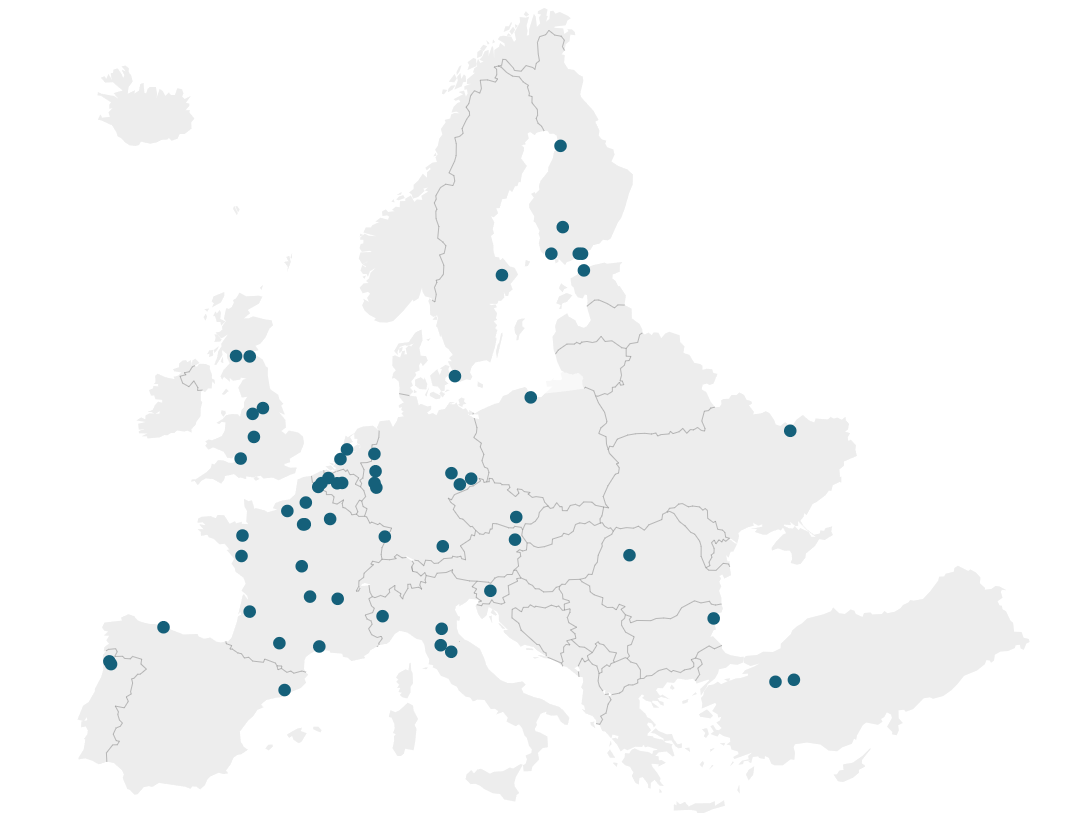
Since its launch, the Call has grown into a dynamic and expanding community, with 60 cities and regions already signed up, and more joining over time.
The Call to Action brings together local authorities from across Europe that share a common ambition: to make cultural life more sustainable, resilient and inclusive.
1. Amiens
2. Amsterdam
3. Arezzo
4. Birmingham
5. Bologna
6. Bonn
7. Bordeaux
8. Bourges
9. Braga
10. Bristol
11. Brno
12. Brussels Capital Region
13. Chemnitz
14. Clermont-Ferrand
15. Cluj-Napoca
16. Cologne
17. Colombes
18. Dresden
19. Edinburgh
20. Enschede
21. Essen
22. Espoo
23. Florence
24. Gdansk
25. Ghent
26. Gijon
27. Glasgow
28. Guimaraes
29. Helsinki
30. Kharkiv
31. Kortrijk
32. Leeds
33. Leuven
34. Leipzig
35. Lille
36. Ljubljana
37. Lyon Métropole
38. Malmo
39. Manchester
40. Montpellier
41. Munich
42. Nantes
43. Odunpazari
44. Osmangazi
45. Oulu
46. Reims
47. Rennes
48. Rouen
49. Rotterdam
50. Saint-Denis
51. Strasbourg
52. Tallinn
53. Tampere
54. Terrassa
55. Toulouse
56. Turin
57. Turku
58. Uppsala
59. Varna
60. Vienna
Structure: two pillars, 16 priorities
The Call to Action is organised around two pillars and 16 priorities, providing a shared yet flexible framework that cities can adapt to their local context.
Pillar I — Ecological transition in the field of culture
1. Reducing the use of resources and using sustainable public procurement
Commit to choosing materials and solutions that consume as little new material as possible, favouring circularity, reuse and second-hand purchases.
2. Preserving nature in urban areas when hosting events
Respect natural sites’ biodiversity in planning and managing cultural events, including assessment before and restoration after.
3. Rethinking mobility / reducing carbon emissions due to the mobility of artists and audiences
Act on sustainable mobility in cultural events by avoiding unnecessary travel, sharing unavoidable travel, and encouraging low-carbon transportation.
4. Encouraging local artistic creation
Favour local production of cultural activities and support local artists and creators across disciplines.
5. Facilitating connections between local cultural stakeholders
Support exchange of innovative practices among local cultural and creative actors and facilitate collaborative projects and common services.
6. Improving the energy efficiency of cultural buildings
Commit to increasing energy efficiency, finding technical solutions to reduce energy consumption, and producing renewable energy on site.
7. Assessing the environmental footprint of cultural events
Aim to produce comprehensive carbon reports and life cycle analysis for cultural events.
8. Using the potential of digital technology in a responsible way
Develop and implement sustainable digital solutions that minimise emissions and reduce unnecessary travel.
9. Training staff and local actors on biodiversity and ecological issues
Increase awareness and skills across city administrations and cultural actors on biodiversity and ecological challenges.
10. Having specialists to carry out public policy objectives on sustainable culture
Appoint internal contact points or specialists to monitor and support sustainable culture policies and stakeholder engagement.
Pillar II — Inclusion in culture and through culture
11. Providing access to cultural programmes for all, ensuring that barriers to access are addressed
Facilitate access to cultural activities for all inhabitants and remove socio-cultural, economic, technological and geographic barriers.
12. Developing ambitious cultural projects for vulnerable groups
Commit to inclusion through culture by designing activities that reach excluded audiences, including in non-traditional settings.
13. Taking creative climate action to improve health and wellbeing
Explore opportunities to integrate climate considerations with health and wellbeing programmes through arts and culture.
14. Strengthening cultural and artistic diversity
Support cultural policies that favour the creation and participation of all artistic expressions, contemporary and heritage alike.
15. Integrating gender issues and ensuring gender parity in local cultural policies
Promote actions that reflect voices of women and gender minorities, and commit to parity within local authority and cultural sector roles.
16. Increasing citizens’ participation in the development and implementation of cultural policies
Develop dialogue and creative means of deliberative democracy on cultural activities, engaging residents, civil society and other groups.