The Lenbachhaus’ Climate Strategy: reducing emissions and supporting nature
Munich – Germany
Pillar 1:
Ecological transition in the field of culture
Priority 6:
Improving the energy efficiency of cultural buildings

Munich’s “Städtische Galerie im Lenbachhaus und Kunstbau” has been actively working to make its spaces more climate friendly. In 2013 it became one of the first museums to be fully equipped with LED lighting, and in 2019, thanks to funding from the German Federal Cultural Foundation, the museum’s carbon footprint was evaluated to raise awareness of its CO2 emissions and to involve the entire team in this effort.
Since then, the museum has monitored its energy use and revised many aspects of its operations, including international transport, mobility, and material consumption. With the support from Munich’s Construction Department and an engineering team, the museum was able to make careful adjustments to its climate control systems such as tailoring the capacity and operation of the AC system to the building’s occupancy and visitor flow. These modifications have proven to be reliable and safe for art preservation, demonstrating how consistent, well-planned adjustments can make a significant difference without altering the technical infrastructure.
Thanks to continuous monitoring, the institution has reduced its annual power and heat consumption by 40%. This corresponds to a reduction of round 850,000 kWh in electricity and 690,000 kWh in heat in 2025 (roughly 350 t of CO2 savings), thereby illustrating a safe and effective way to protect both art and the environment. Further findings also revealed that the detached underground exhibition space, ‘Kunstbau’, requires energy-efficiency renovations. Work on this began in 2026, and it is expected that this venue will also achieve energy savings of over 30%.
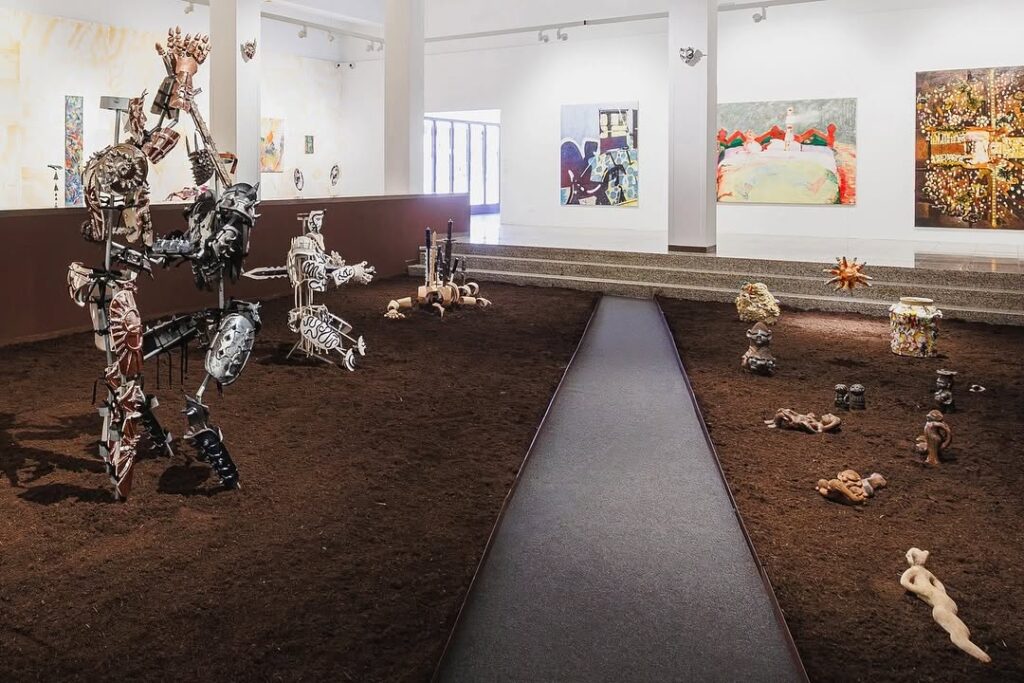
Additionally, the museum has expanded its sustainability efforts into other areas as well. For example, since 2022, the Lenbachhaus’s public garden has hosted ‘Meet Your Bees’, whereby visitors learn about bees’ ecological importance from a local beekeper and observe hives year-round. From 2025 to 2027, the exhibition ‘What May Vanish Becomes Image. Regarding Nature and Art’ reflects on the fleeting nature of our environment and our natural and cultural heritage. Finally, in 2026, the museum took on patronage of two ‘water benches’ on its forecourt, funded by Munich’s public participatory budgeting scheme. With plants on each side, these benches are designed as a self-sufficient system that offers a resting place during hot summer days, while supporting urban biodiversity.